Greek yogurt delivers more protein and fewer calories than standard yogurt — making it one of the most effective foods for weight loss available in UK supermarkets.
Greek yogurt is strained to remove liquid whey, which concentrates the protein and reduces the sugar content. A 0% fat plain Greek yogurt typically contains 9–10g of protein and 55–65 kcal per 100g. Standard yogurt contains roughly 5g of protein and more sugar per 100g.
Protein increases satiety and reduces overall calorie intake across the day. Live bacterial cultures — including Lactobacillus bulgaricus and Streptococcus thermophilus — support gut health and digestion. Both factors make Greek yogurt particularly useful for anyone managing their weight.
This guide ranks eight widely available UK Greek yogurts by calories and protein per 100g, identifies the best options by use case, flags the flavoured yogurt calorie trap, and answers the most common questions about Greek yogurt and weight loss.
Greek yogurt provides more protein per calorie than almost any other dairy food available in UK supermarkets. At 57–65 kcal per 100g for a 0% fat option, Greek yogurt delivers 9–10g of protein — a ratio that few foods match.
Protein reduces appetite by suppressing ghrelin, the hunger hormone. Research published in the American Journal of Clinical Nutrition found that higher-protein meals reduce subsequent calorie intake by up to 20%. Greek yogurt works as a practical delivery mechanism for that protein at low caloric cost.
Live cultures in Greek yogurt support the gut microbiome. A balanced microbiome is associated with better metabolic function and reduced inflammation — both relevant to long-term weight management.
Unlike flavoured yogurts or low-fat alternatives, plain 0% fat Greek yogurt contains no added sugar. The macronutrient profile — high protein, near-zero fat, low sugar — makes Greek yogurt one of the most efficient weight-loss foods in the chilled aisle.
When choosing a Greek yogurt for weight loss, prioritise protein per 100g, total calories, and sugar content — in that order.
The four metrics to check on the label are listed below. Check per 100g figures — not per serving — because serving sizes vary between brands and comparing per 100g is the only consistent method.
Live cultures are worth checking too — look for “contains live cultures” on the label. Most authentic Greek yogurts include them; some cheaper Greek-style products do not.
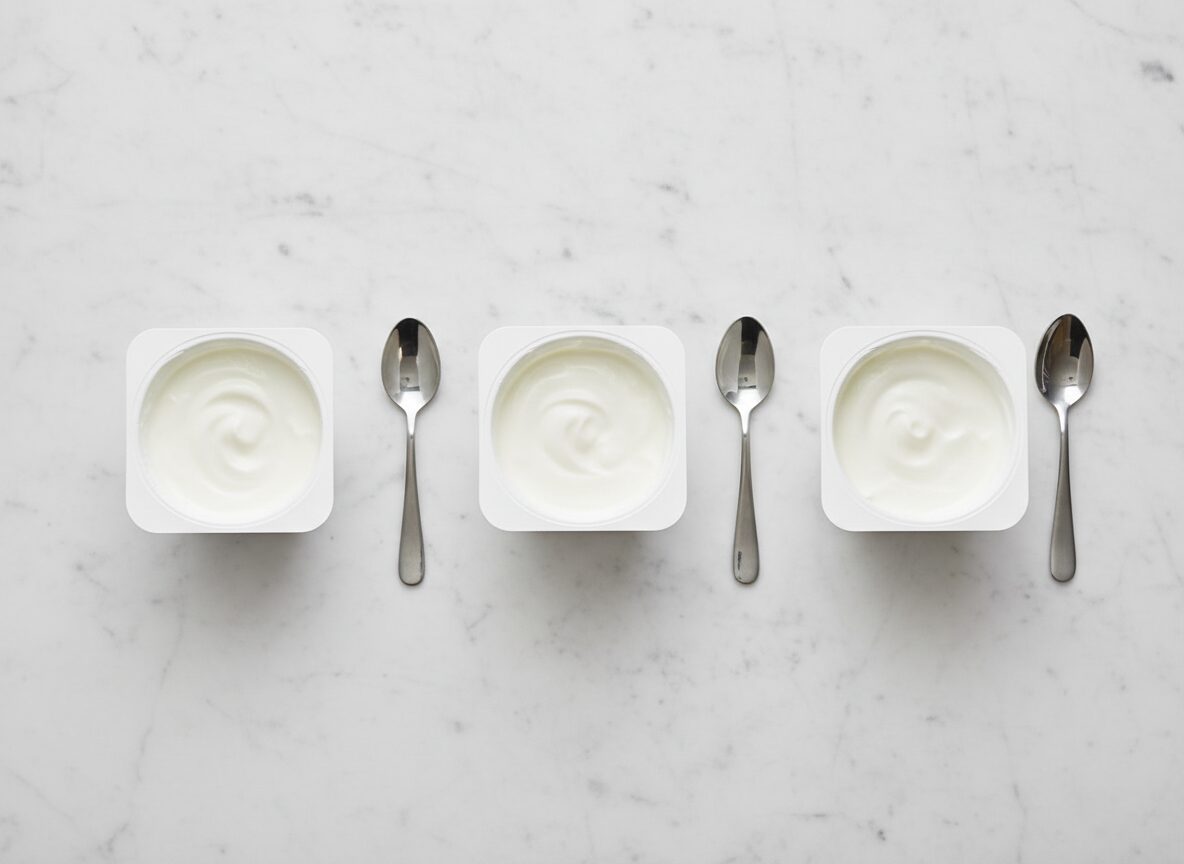
The table below ranks eight widely available UK Greek yogurts by protein per 100g. All figures are for plain, unsweetened varieties. Flavoured variants are addressed separately below.
| Brand | Calories (kcal/100g) | Protein (g/100g) | Fat (g/100g) | Sugar (g/100g) | Available at |
|---|---|---|---|---|---|
| Aldi Brooklea 0% Authentic Greek | 57 | 10.4 | 0.2 | 4.0 | Aldi |
| Arla Protein Plain | 65 | 10.0 | 0.2 | 4.5 | Tesco, Sainsbury’s, Asda |
| Fage Total 0% | 57 | 10.0 | 0.3 | 3.7 | Tesco, Sainsbury’s, Waitrose |
| Tesco Finest 0% Fat Greek | 60 | 9.8 | 0.2 | 4.2 | Tesco |
| Lidl Milbona 0% Fat Greek | 55 | 9.0 | 0.2 | 4.0 | Lidl |
| Activia 0% Fat Plain | 58 | 5.0 | 0.2 | 6.5 | Most major supermarkets |
| Tesco own-brand Greek Style | 80 | 4.5 | 4.5 | 5.5 | Tesco |
| Alpro Plain No Sugars (soya)* | 43 | 3.8 | 2.2 | 0.2 | Most major supermarkets |
*Alpro is plant-based and not Greek yogurt — included as a dairy-free alternative for comparison only.
The top three — Aldi Brooklea, Arla Protein, and Fage Total 0% — deliver 10g or more of protein at under 65 kcal per 100g. Activia 0% and the Tesco Greek Style both score considerably lower on protein despite similar calorie counts, making them weaker choices for weight loss.
Different goals call for different choices. The three standout picks from the table above are listed below by use case.
Best for Protein: Aldi Brooklea 0% Authentic Greek Yogurt
Aldi Brooklea contains 10.4g of protein per 100g — the highest of any widely available UK supermarket option. A 500g tub costs around £1.89, giving Aldi Brooklea the best protein-to-price ratio in the UK. Texture is thick and consistent.
Best for Weight Loss: Fage Total 0%
Fage Total 0% scores well on every metric — 57 kcal, 10g protein, and only 3.7g sugar per 100g. Fage Total 0% has a thicker texture than most supermarket alternatives, making Fage Total 0% more satisfying to eat. If you follow Slimming World, check out our guide to Fage yogurt syns for exact syn values per serving.
Best Budget: Lidl Milbona 0% Fat Greek Yogurt
Lidl Milbona costs under £1.50 per 500g tub. At 55 kcal and 9g protein per 100g, Lidl Milbona delivers solid nutrition at the lowest price point of any option in the table. Texture is slightly thinner than Fage or Brooklea — better suited to smoothies and overnight oats than eating straight.
Flavoured Greek yogurts contain 30–60% more calories and 2–4 times more sugar than plain equivalents. The word “light” on the label does not change this significantly.
A plain Fage Total 0% contains 57 kcal and 3.7g of sugar per 100g. Fage Total 0% with strawberry contains around 80 kcal and 12g of sugar per 100g. That is three times the sugar for the same brand and format.
Activia flavoured pots regularly exceed 90 kcal per 100g. Yogurts with a fruit compote layer at the bottom add further sugar that sits beneath the yogurt and is easy to miss on the label.
Buy plain. Add your own fruit. A handful of fresh or frozen berries adds roughly 10–15 kcal and less than 3g of sugar — far less than any flavoured variant.
Greek yogurt works beyond breakfast. Greek yogurt replaces higher-calorie ingredients in sauces, dips, baking, and snacks — reducing overall calorie intake without changing the texture of the finished dish significantly.
Five practical uses for plain 0% fat Greek yogurt are listed below:
All five uses apply to plain 0% fat Greek yogurt only. Flavoured varieties add sugar and calories that undermine the calorie savings in each scenario above.
Yes. Greek yogurt is high in protein, which keeps hunger suppressed and reduces overall calorie intake. A 0% fat plain option delivers around 10g of protein and only 57–65 kcal per 100g — making Greek yogurt one of the most efficient weight-loss foods available in UK supermarkets.
Aldi Brooklea 0% Fat Authentic Greek Yogurt contains 10.4g of protein per 100g — the highest of any widely available UK supermarket option. Fage Total 0% and Arla Protein both offer around 10g per 100g and are available in a wider range of supermarkets.
Fage Total 0% is one of the strongest options. Fage Total 0% scores 57 kcal, 10g protein, and 3.7g sugar per 100g — competitive on every metric. Aldi Brooklea edges Fage Total 0% on protein at 10.4g per 100g and costs less. For most people the difference is marginal; both are strong choices.
Yes. Plain 0% fat Greek yogurt contains no ingredients that cause concern with daily consumption. Greek yogurt provides protein, calcium, and live bacterial cultures consistently — and most UK dietitians consider Greek yogurt a beneficial daily addition for adults managing their weight.

Related Articles
