Porridge is one of the most effective weight loss breakfasts available in the UK. A 40g serving of plain rolled oats made with water contains roughly 148 calories, delivers 4g of soluble fibre, and keeps hunger at bay for 3–4 hours longer than most alternatives.
Oats contain beta-glucan, a soluble fibre that slows digestion and lowers the glycaemic index (GI) of the meal to around 55–58. This slow-release energy prevents the blood sugar spikes that trigger cravings and mid-morning hunger.
Research published in the Journal of the American College of Nutrition found that oat-based breakfasts increase satiety scores by 31% compared to ready-to-eat cereals of equal calories. Beta-glucan also stimulates the gut hormone PYY, which signals fullness to the brain.
Porridge works for weight loss because of fibre, satiety, and calorie control — not because oats are magic. The base is low-calorie. The toppings and liquid determine whether porridge stays a diet food or becomes a calorie bomb.
This guide covers calories in every type of UK porridge, a comparison table of popular brands, the best and worst toppings, overnight oats, common mistakes, and an FAQ section.
Porridge supports weight loss through four measurable mechanisms: high fibre content, low energy density, slow-release carbohydrates, and prolonged satiety.
A standard 40g serving of oats provides 4g of beta-glucan fibre. Beta-glucan forms a viscous gel in the digestive tract that slows gastric emptying. Slower digestion means lower blood sugar peaks and longer-lasting fullness.
Oats have a low energy density of approximately 1.6 calories per gram (cooked with water). Compare this to granola at 4.5 calories per gram or cornflakes at 3.7 calories per gram. Lower energy density means a larger volume of food for fewer calories.
The GI of plain porridge sits at 55–58, well below the threshold of 70 that classifies a food as high GI. Lower GI foods reduce insulin spikes and support consistent energy levels throughout the morning.
A standard bowl of porridge (40g oats) made with water contains approximately 148 calories. Adding milk increases this significantly depending on which type of milk you choose.
The liquid choice is the single biggest calorie variable in porridge. Skimmed milk adds the fewest extra calories. Whole milk or oat milk can add 80–120 calories to the same base serving.
The following table shows calorie counts for a 40g oat serving made with 200ml of different liquids:
| Preparation Method | Calories (approx) | Protein (approx) |
|---|---|---|
| Oats + water (40g) | 148 kcal | 5g |
| Oats + skimmed milk (200ml) | 200 kcal | 11g |
| Oats + semi-skimmed milk (200ml) | 222 kcal | 11g |
| Oats + whole milk (200ml) | 255 kcal | 11g |
| Oats + oat milk (200ml) | 232 kcal | 6g |
For the lowest-calorie bowl, use water or skimmed milk. Skimmed milk adds protein without the calorie penalty of whole or oat milk.
Plain rolled oats give the best calorie-to-satiety ratio of any UK porridge option. Instant sachets and flavoured pots trade fibre content and portion control for convenience — at a calorie cost.
Instant sachets are smaller servings than most people realise. A Quaker Oat So Simple Original sachet weighs just 27g — less than the standard 40g serving used in most calorie calculations. The flavoured variants add sugar, pushing calories above the plain oats equivalent.
The following table compares the most popular UK porridge options by calories per standard serving, ranked lowest to highest:
| Porridge Option | Serving Size | Calories (made with water) | Key Note |
|---|---|---|---|
| Aldi Porridge Oats (plain) | 40g | ~148 kcal | Best value; comparable oats to premium brands |
| Scott's Porage Oats | 40g | ~148 kcal | Coarser texture; slower to digest |
| Quaker Rolled Oats (plain) | 40g | ~150 kcal | Widely available; reliable fibre content |
| Ready Brek (plain) | 40g | ~153 kcal | Smoother texture; slightly more processed |
| Overnight Oats (plain, water or milk) | 40g oats | 148–200 kcal | Same calories as cooked; easier meal prep |
| Quaker Oat So Simple Original sachet | 27g | ~103 kcal | Small serving — check this is enough for you |
| Quaker Oat So Simple Golden Syrup sachet | 38g | ~150 kcal | Added sugar; lower satiety per calorie |
| Aldi Porridge Pots (flavoured) | 57g pot | ~216 kcal | Higher sugar; see our porridge pots syn guide for Slimming World |
Plain rolled oats — whether Aldi, Scott's, or Quaker — rank as the best porridge for weight loss. The calorie difference between brands is negligible. The difference between plain oats and flavoured pots is significant.
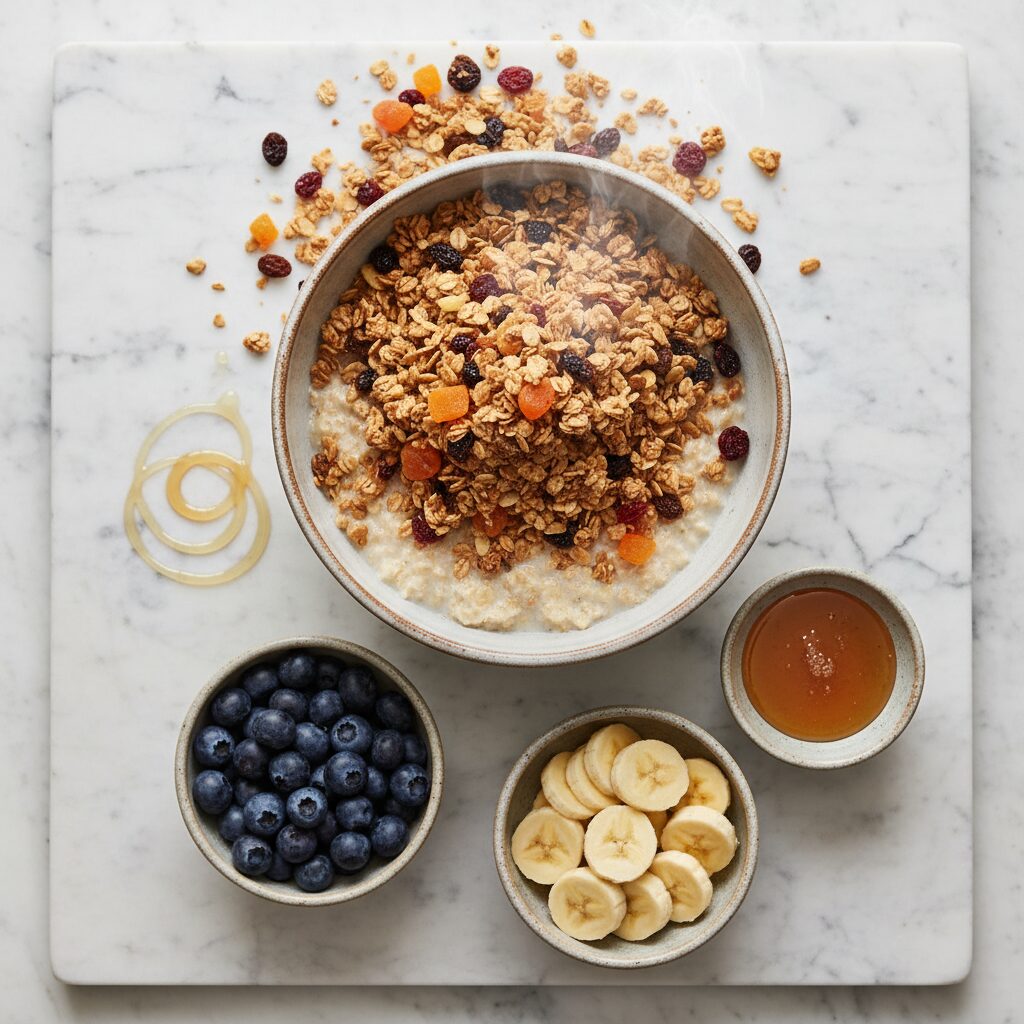
Toppings can double the calorie count of a porridge bowl in under 60 seconds. A bowl that starts at 148 calories can reach 450 calories with two or three generous additions.
Berries are the best topping for weight loss. A 100g serving of mixed berries adds 35–50 calories alongside vitamin C, antioxidants, and additional fibre. Fresh or frozen berries make no meaningful difference to calorie content.
The following table shows the calorie impact of common UK porridge toppings per typical serving:
| Topping | Typical Serving | Calories Added | Verdict |
|---|---|---|---|
| Mixed berries (fresh or frozen) | 100g | +35–50 kcal | Best choice |
| Sliced banana | 1 medium (100g) | +89 kcal | Good; adds potassium and natural sweetness |
| 1 tsp honey | 7g | +21 kcal | Fine in small amounts |
| 1 tbsp maple syrup | 20g | +52 kcal | Use sparingly |
| 1 tbsp peanut butter | 16g | +94 kcal | Calorie-dense; measure carefully |
| 1 tbsp golden syrup | 21g | +64 kcal | High sugar; avoid for weight loss |
| Double cream (splash) | 30ml | +132 kcal | Avoid entirely if managing calories |
Stick to berries or a sliced banana. One teaspoon of honey adds flavour without significant calorie impact. Peanut butter and syrup toppings are the fastest way to undermine an otherwise low-calorie breakfast.
Overnight oats contain the same calories as cooked porridge made from identical ingredients. The preparation method changes texture and convenience — not calorie content.
A standard overnight oats recipe uses 40g of rolled oats, 200ml of milk or water, and optional toppings. This produces the same 148–200 calorie base as stovetop or microwaved porridge using the same quantities.
Overnight oats offer practical advantages for weight loss. Preparing breakfast the night before removes decision fatigue from early-morning meal choices. Pre-portioned jars prevent the gradual portion creep that happens when scooping oats each morning.
Rolled oats work better than instant oats for overnight preparation. Rolled oats absorb liquid without turning excessively soft. Steel-cut oats require a longer soak of 8–12 hours to achieve an edible texture without cooking.
Three mistakes account for most cases where porridge fails to support weight loss: using too much milk, adding calorie-dense toppings without measuring, and eating portions larger than 40–50g of dry oats.
Portion size is the most common error. Most people scoop oats directly from the bag and significantly exceed a 40g serving. A 40g portion of dry oats looks small in the bowl before liquid is added. Weighing oats on a kitchen scale for the first two weeks of a new diet removes guesswork entirely.
Switching from whole milk to skimmed milk across 7 daily bowls saves approximately 245 calories per week. Over a full year that single change equates to roughly 1.3kg of additional fat loss.
Adding both a banana and peanut butter to a bowl creates a 340-calorie topping layer on top of a 148-calorie base. That bowl reaches 488 calories — higher than two slices of wholegrain toast with eggs. Choose one topping, not three.
Porridge outperforms toast for weight loss due to higher fibre content, a lower GI, and greater satiety per calorie. A 148-calorie bowl of plain porridge (made with water) produces significantly more fullness than 148 calories of white toast.
Two slices of medium white bread contain approximately 166 calories with a GI of 70–75. White toast raises blood sugar rapidly and provides under 2g of fibre per two slices. Plain porridge at comparable calories delivers 4g of beta-glucan fibre and a GI of 55–58.
Wholegrain toast narrows the gap. Two slices of wholegrain bread contain roughly 154 calories with 4–6g of fibre and a GI closer to 51. Wholegrain toast is a reasonable alternative — but porridge retains the advantage on satiety.
A standard bowl of porridge made with 40g of plain oats and water contains approximately 148 calories. Made with 200ml of skimmed milk, the same serving contains around 200 calories. Semi-skimmed milk brings the total to approximately 222 calories.
Eating porridge every day supports weight loss when total daily calorie intake remains below your maintenance level. Porridge alone does not cause weight loss. Porridge assists weight loss by reducing hunger, supporting consistent energy, and providing a low-calorie breakfast that prevents mid-morning snacking.
No. Overnight oats contain the same calories as cooked porridge made from the same quantities of oats and liquid. A 40g serving of rolled oats contains 148 calories regardless of preparation method. The only calorie difference comes from added ingredients such as yogurt, chia seeds, or fruit toppings.
Plain rolled oats — Quaker, Scott's Porage Oats, or supermarket own-brand — are the best porridge for weight loss in the UK. Plain oats deliver the highest fibre content relative to calories and give full control over portion size. Avoid flavoured sachets and pots, which contain added sugar and offer smaller portions than the standard 40g serving.
Flavoured porridge pots are less effective for weight loss than plain oats. Most branded pots contain 6–12g of added sugar per serving and range from 200–250 calories per pot. For Slimming World members, these also carry a high syn value — see our porridge pots syn guide for Slimming World for full syn values across Quaker, Aldi, and supermarket brands.
Bananas are a popular addition to porridge — and still Free on Slimming World. See Calories in a Banana UK for exact calorie counts by size.

Related Articles
